
Gastronomy of Asturias
Asturian gastronomy is the reflection of a rich and varied culinary tradition, marked by the influence of the land and the sea.
It is characterized by the use of high quality local products, The restaurant serves dishes such as fabada with farm beans, natural cider, artisan cheeses (Cabrales, Afuega'l Pitu, Gamoneu), as well as seafood dishes made with fish and shellfish from the Cantabrian Sea. Its cuisine combines the forcefulness of mountain stews with the freshness of coastal flavors, maintaining a strong attachment to traditional recipes that transmit the cultural identity and hospitable character of Asturias.
 Vegetables typical of the region are turnips, caxines, a type of green bean, and wild mushrooms such as senderuelas, oyster mushrooms and lepiotas.
In the field of meat products is due to cattle and sheep, being the churrasco or lamb to the stake, lamb or lamb are some of the main protagonists. The pork provides sausages and salted meats such as Asturian chorizo, Asturian black pudding and moscancia, lacón, butiellola fariñona, and others.
Fish and seafood are very present in the region as it is in contact with the Cantabrian Sea. Fish such as sea bream, monkfish, hake, tuna belly, sea bass, scorpion fish, red mullet, elvers, sardines, trout, Atlantic salmon, etcetera. Seafood includes crab, lobster, lobster, spider crabs, spider crabs, sea urchins and crabs.
There are 42 denominations of artisan cheeses in Asturias, of which three have European designation of origin: Cabrales, Gamonedo and Afuega'L Pitu. Finally, the most characteristic drink of Asturias is cider, very present in the life and celebrations of Asturians.
DESIGNATIONS OF ORIGIN OF ASTURIAS
Once the main products of the Asturian lands have been explained, the Denominations of Origin of the region will be commented, being products of a more remarkable and qualified quality:
– Cabrales cheeseIt has become one of the signs of identity and the ambassador par excellence of Asturias in the rest of the world. It is made from raw cow's milk throughout the year and during the months of June and July it is mixed with sheep's and goat's milk.
– Gamoneu cheeseAlso called Gamonéu cheese, this cheese is made exclusively in the village of the same name, in the Principality of Asturias. It is a blue cheese that is made in the traditional way and in a similar way to Cabrales cheese. It uses the three types of milk that exist in Spain (goat, cow and sheep) from both morning and afternoon milking. It is then left to curdle and then salted, and finally, smoked. This is done in huts with wood fire for a minimum period of one week. It is then left to rest in the natural caves of the region, where it acquires a bluish color due to the action of the fungi. The milk used is not pasteurized and must have a maturation period of at least two months. It has a strong and intense aroma of smoke and a slightly spicy flavor. There are two varieties of this type of cheese: Gamonéu del Valle and Gamonéu del Puerto.
 – Afuega Il Pitu cheeseis one of the oldest cheeses in Spain and the oldest in Asturias. The flavor is creamy, unctuous and strong, tending to acid, with a very particular aroma that makes this dairy product one of the most charismatic of Asturias. It weighs between 200 and 600 grams and can be enjoyed fresh, semi-cured or cured. It is made mainly with pasteurized Friesian cow's milk, and its production area covers the central-western part of Asturias.
– Casín CheeseThe milk used is from the Casina cow, a native breed dedicated mainly to meat production, with a very limited yield in milk production, but which, by grazing in very rich and exclusive places, generates a milk with a high fat content. The rennet used is formed from the dried stomach of the pig, which gives the cheese its unique flavor.
– Beyos CheeseThe following is the subject of a small and rough cheese, whose texture and color is inimitable, being unique and exclusive. It has a buttery flavor due to the rennet of cow's and sheep's milk or simply cow's milk. It takes two or three weeks to mature.
– Chosco de Tineo: This is the most unique sausage of Asturias. It is cured and smoked in pork blind, and the ingredients used in its preparation are loin and tongue header, salt, paprika and garlic. Its characteristic color is reddish. Its flavor is sweet and sour with a mild smoked flavor.
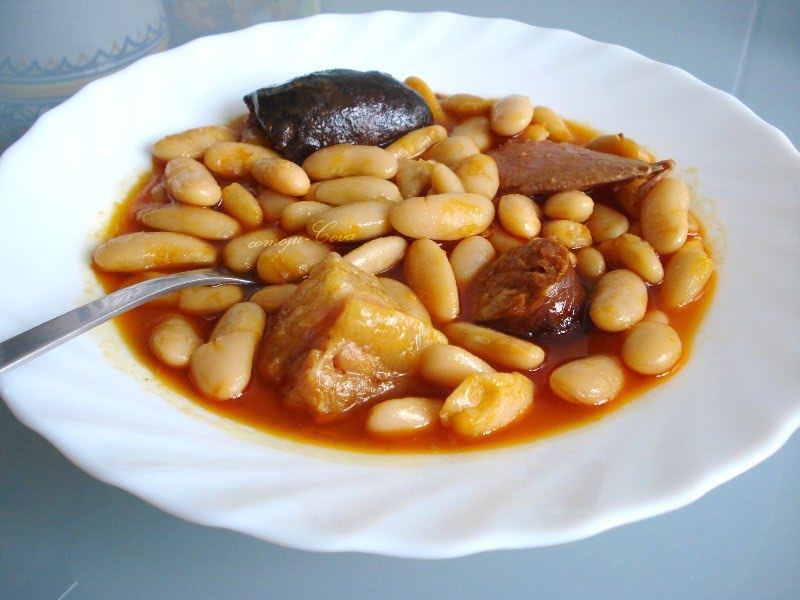
– Fabada AsturianaAsturian Beans: is the universal dish of Asturias in the world. It is cooked with a huge variety of Asturian beans. Some of the most popular varieties of Asturian beans are: roxa, or colorá (for stewing); verdina (very fashionable, small and green to eat with elvers or rabbit, seafood in general or game dishes); fabones, or May beans; kidney beans (to serve with vegetables); pinta, güeyín, amarillina, granjilla, etc. According to current custom, it consists of Asturian faba beans, chorizo, cured Asturian black pudding, pork shoulder and bacon.
– Asturian vealThe two native breeds, Asturiana de los Valles and Asturiana de la Montañas, are calves of high meat quality.. It is a healthy meat because it has low levels of cholesterol and uric acid, it is rich in protein and low in fat, it is tasty and very juicy. It is also a rich source of iron, copper, phosphate, potassium, sodium and magnesium. Its excellent genetics is completed with a natural diet: mother's milk and pasture.
– Cideris a low alcoholic beverage made from the fermented juice of the apple. There are several elaboration processes depending on the different regional traditions. In any case, the first step always consists of harvesting the apples in autumn.
– Vino de la Tierra de CangasThe different types of native grapes that we can find are: carrasquín, berdejo and albarín. In all cases it is a light wine with hints of wood, good taste, some acidity and a balanced alcohol content: 10.5 degrees minimum for red wine and 9.5 for white wine.
MAIN TRADITIONAL DISHES OF ASTURIAN GASTRONOMY
The region of Asturias is one of the autonomous communities with the best gastronomy, being also the main motivation that encourages people to visit it. We will now proceed to explain the main traditional dishes of Asturian gastronomy:
 – Asturian potIt is a stew that mainly contains white beans and different pork products. It is usually prepared with different types of Asturian black puddings, xuanicu or botiello, as well as different parts of it such as ear, mask and/or pig's tail, these sausages are usually called compango. Sometimes a little rice is added. It usually takes about 6 to 8 hours to prepare. In some large supermarkets this dish is available canned.
– Sea bream on the backBaked sea bream, so called because it is shown with both loins. The ingredients to elaborate this dish are the following: a large sea bream, garlic, lemon, vinegar, parsley, chilli, soft wine, parsley, oil and salt. It is a very healthy dish with no fat or cholesterol.
– Cabracho Cakeis a kind of pudding or pâté that is ideal as a starter for any meal, especially for the Christmas holidays. The scorpion fish is a rock fish, salmon or orange in color, whose firm and firm flesh has a flavor reminiscent of seafood.
– Casadiellas: are a kind of sweet pastry filled with walnuts, sugar and aniseed. They are, along with rice pudding and frixuelos, the most typical and well-known desserts of Asturias. In some areas the casadielles or les casadielles, are eaten at Christmas and in others at Carnival, either way, they are a delicious sweet snack that in each house is made according to family tradition. There are two varieties of this sweet, the casadielles of dough, which are made fried, and those of puff pastry, which are baked in the oven.
– Frisuelos: is a typical dessert from Cantabria, Asturias and León made with flour, milk and eggs. A spoonful of sugar is sprinkled on the surface of a plate and the first frixuelu is placed on it, then another spoonful of sugar and another frixuelu and so on. The traditional way to eat them is to roll them up and it is advisable that they are hot.
Tell us what you thought of this article, please rate (1 TO 5 STARS).


