


The Community of Madrid is an autonomous community located in the center of the Iberian Peninsula and therefore in the center of the central plateau. It is bordered to the north by Segovia, to the east by Guadalajara, to the south by Toledo and Cuenca and to the west by Avila. It is uniprovincial, its capital Madrid, is also the capital of Spain.
The relief of Madrid is diverse, although it could be summarized in two main groups: the mountains and the plains of the Tajo valley, perhaps because of this privileged situation, it enjoys most of the ecosystems which allows it to produce a large amount of food.
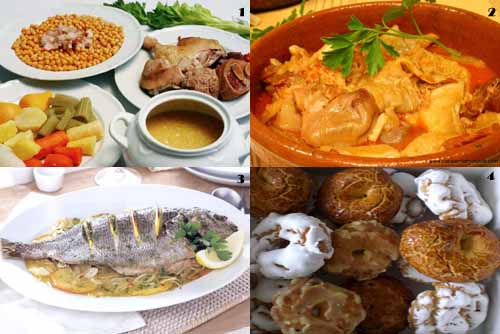 It has a varied gastronomic offers ranging from traditional to modern cuisine. From exquisite stews or roasts through vegetables and fruits, to modern miniature cuisine.
. which is proper by its culture and origin to the common of the other provinces of Castile. At this time probably began the style of popular mesón that today still remains in Madrid's cuisine, the gallinejeras frying in the street and the canteens serving wine. Some of today's typical inns date back to the 18th century: for example the Casa Botín, with its rancid Castilian flavor, was established as an inn as early as 1725, or the Posada de la Villa, which dates back to 1642.
However, today the recipes commonly accepted as typically Madrilenian are: The Cocido Madrileño(formerly called "olla podrida") or chickpea stew, as well as other vegetable stews, the Tripe a la Madrileña, made from beef casings, the Garlic Soup, the Tortilla de Patatas or Spanish omelette and delicious lamb or veal recipes. All this, making good use of vegetables and fresh vegetables, among which stand out the asparagus of Aranjuez, of extraordinary quality and delicious flavor.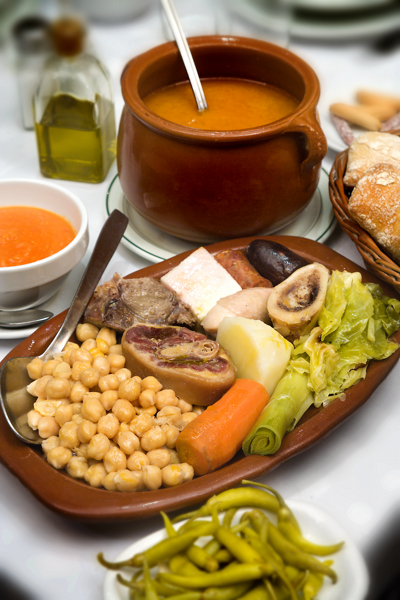
Although it may seem paradoxical considering its geographical location, its gastronomy abounds in fish, which is found here in exceptional quantity and quality. It is no coincidence that the city is home to the second largest central fish market in the world, after Tokyo. Among its most traditional recipes are the baked sea bream and the cod.
And there is nothing more Madrilenian than accompanying a dinner with a recent appellation of origin; “Wines of Madrid”.”, The most traditional distillates, young, fruity and aromatic in their red, rosé and white versions, will be even more traditional. And even more traditional will be to finish it with the much more traditional distillates; the Chinchón anisettes.
Among its sweets, the following stand out for their typicality “Roscos del Santo”.”, The traditional sweets that are eaten for San Isidro, patron saint of the city, typical sweets that come into play during the holidays: torrijas, the sweet par excellence, is usually eaten at Easter; fritters, which are filled with cream, chocolate, cream and bones of saint, are typical of the day of the dead...
We cannot talk about gastronomy without mentioning the numerous markets that once provided food for the city's inhabitants: the San Miguel Market, the Cebada Market, the Barceló Market, etc. The appearance in 1982 of Mercamadrid has made the capital one of the most important vegetable and fish supply points in Europe.
DESIGNATIONS OF ORIGIN OF MADRID
The Madrid region has an important agri-food offer, legally recognized in the following designations of origin:
DO Wines of Madrid: The company is divided into three main areas: Arganda del Rey, Navalcarnero and San Martín de Valdeiglesias, with the “Arganda del Rey” sub-area, located in the southeast of Madrid, comprising the largest number of municipalities and the one with the highest production.
Most of the production is focused on young reds and rosés (Navalcarnero) and whites, some of which are excellent for aging (especially those from the Arganda subzone). There are, however, Crianza reds, some sparkling wines and the characteristic "sobremadre".
DO Aceite de Madrid: The extra virgin olive oil obtained by mechanical processes from the majority olive varieties Cornicabra and Manzanilla, and from the minority olive varieties Verdeja, Carrasqueña, Picual and Gordal, all of them from 97 municipalities in the Community of Madrid, is characterized by its low acidity, its intense and bright yellow color with greenish edges and its fragrant aroma. It is a very healthy and natural product, with a long shelf life.
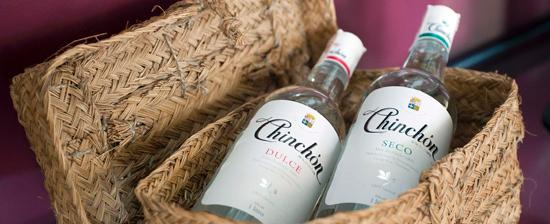 Anise from Chinchón: Covered by the geographical denomination, the elaboration of this drink begins with the maceration, during twelve or fourteen hours, of the aniseed in a hydroalcoholic solution. Subsequently, it is distilled in copper stills, and only the “heart” of the distillate, with a graduation of between 74 and 79% vol. can be used to obtain this aniseed.
The result is a colorless, transparent product, free of suspended particles. With frank and clean smell and taste of green anise.
Meat from the Sierra de Guadarrama: With PGI, the Avileña-Negra Ibérica breed is a native breed, characterized by the high quality of its meat, which has its origin in the mountainous areas of the center of the Iberian Peninsula, the following types can be distinguished:
-Veal: Its meat is light red or pinkish in color, with fat of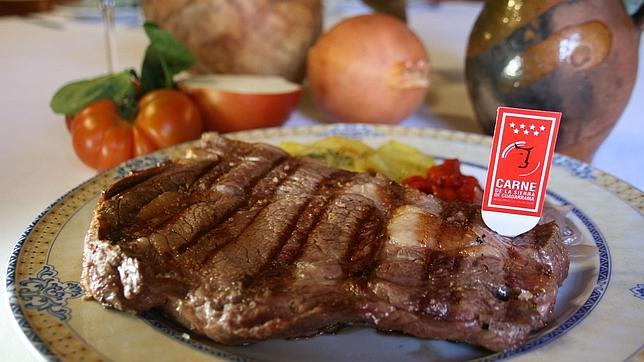 white color and homogeneous distribution, muscle of firm consistency and slightly moist.- Añojo: meat presents a light red to bright purple red color, with white to cream colored fat, muscle of firm consistency to the touch, slightly moist and fine texture.- Cebón: meat presents a creamy colored fat, muscle of firm consistency, slightly moist and infiltrated with fat, but without excessive accumulations.
Olives from Campo Real: With a quality designation, Campo Real olives are subjected to a particular process of elaboration and a subsequent handmade dressing, 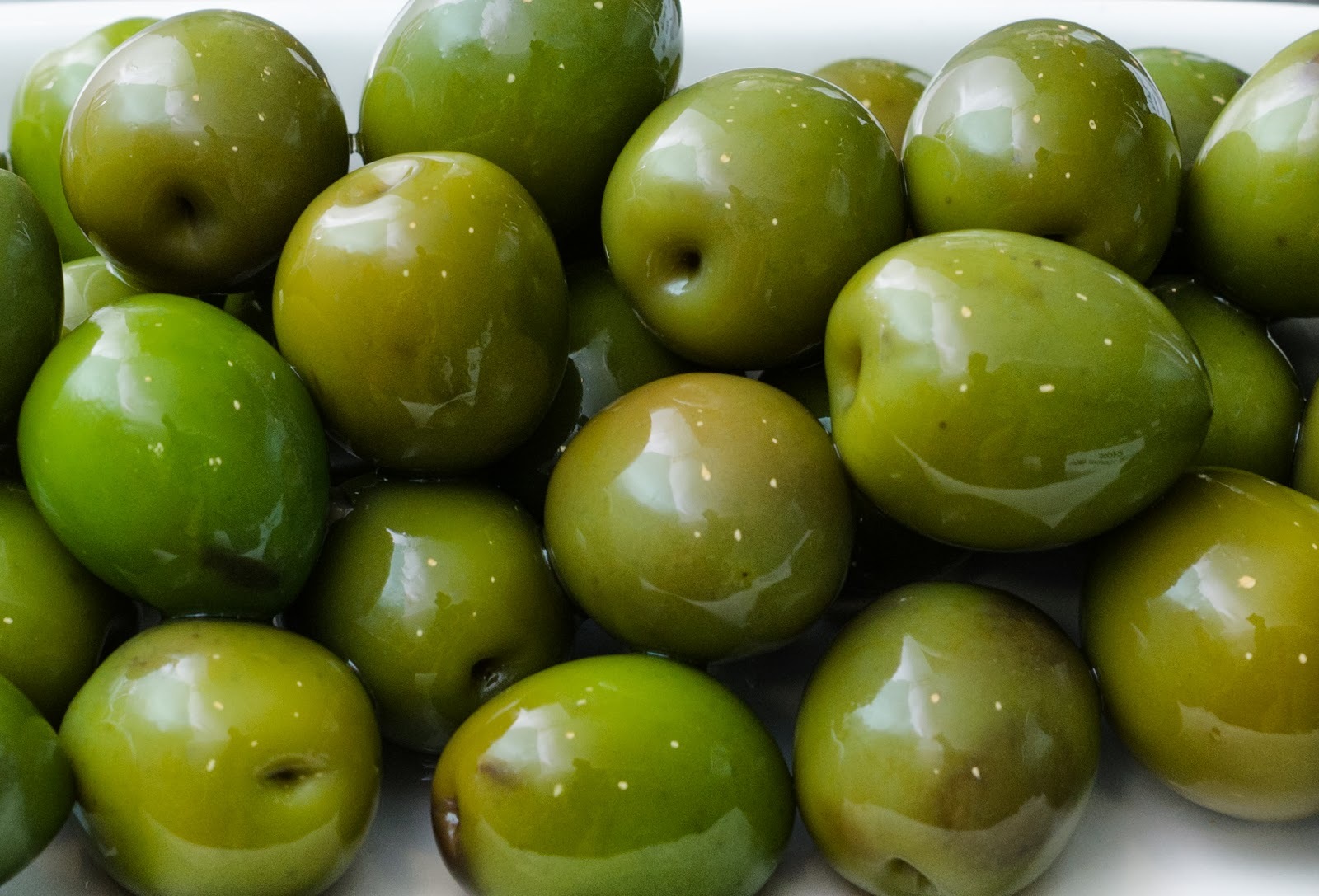 with natural products, which differentiate them from other species. These olives belong to the Manzanilla de Campo Real and Manzanilla Cacereña varieties, which are characterized by their intense green-brown color and large size. Their fruits are rounded, thin-skinned and have a very firm flesh texture.
They are not distinguished with geographical distinctions, but they are not exempt of the same quality as the previous ones. Other foods from Madrid enjoy a well-deserved fame inside and outside the region. These include products such as melons from Villaconejos, strawberries and asparagus from Aranjuez, beans from the Sierra Norte or garlic from Chinchón.
MAIN TRADITIONAL DISHES OF MADRID'S GASTRONOMY
Among the excellent products of the area, we get a diverse variety of dishes, which, any visitor can not leave Madrid without trying them due to their popularity, such as:
Cocido madrileño: A popular vegetable and meat stew, which frequently appears on the Tuesday menu in restaurants in the capital. It contains chickpeas, meat (usually beef), vegetables and sausages. It is usually served in three vuelcos or dishes: first a soup made with the broth; then the legumes and vegetables; and finally the meats and sausages.
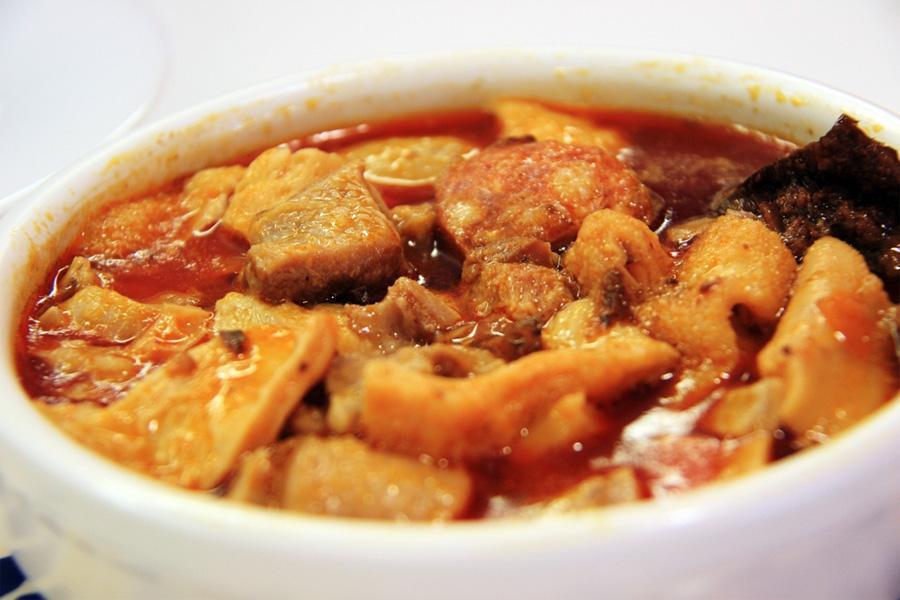
Callos a la madrileñaCallos: a variant of tripe, probably introduced by Asturian emigrants who arrived in the capital during the 19th century. They are made with beef or lamb tripe, cow's leg and snout, chorizo, blood sausage, paprika and other seasonings.
Starry eggsFried eggs on a bed of fried potatoes garnished with ham, chorizo or chistorra sausage is one of the great pleasures that can be enjoyed on any terrace in Madrid as it is a very simple dish.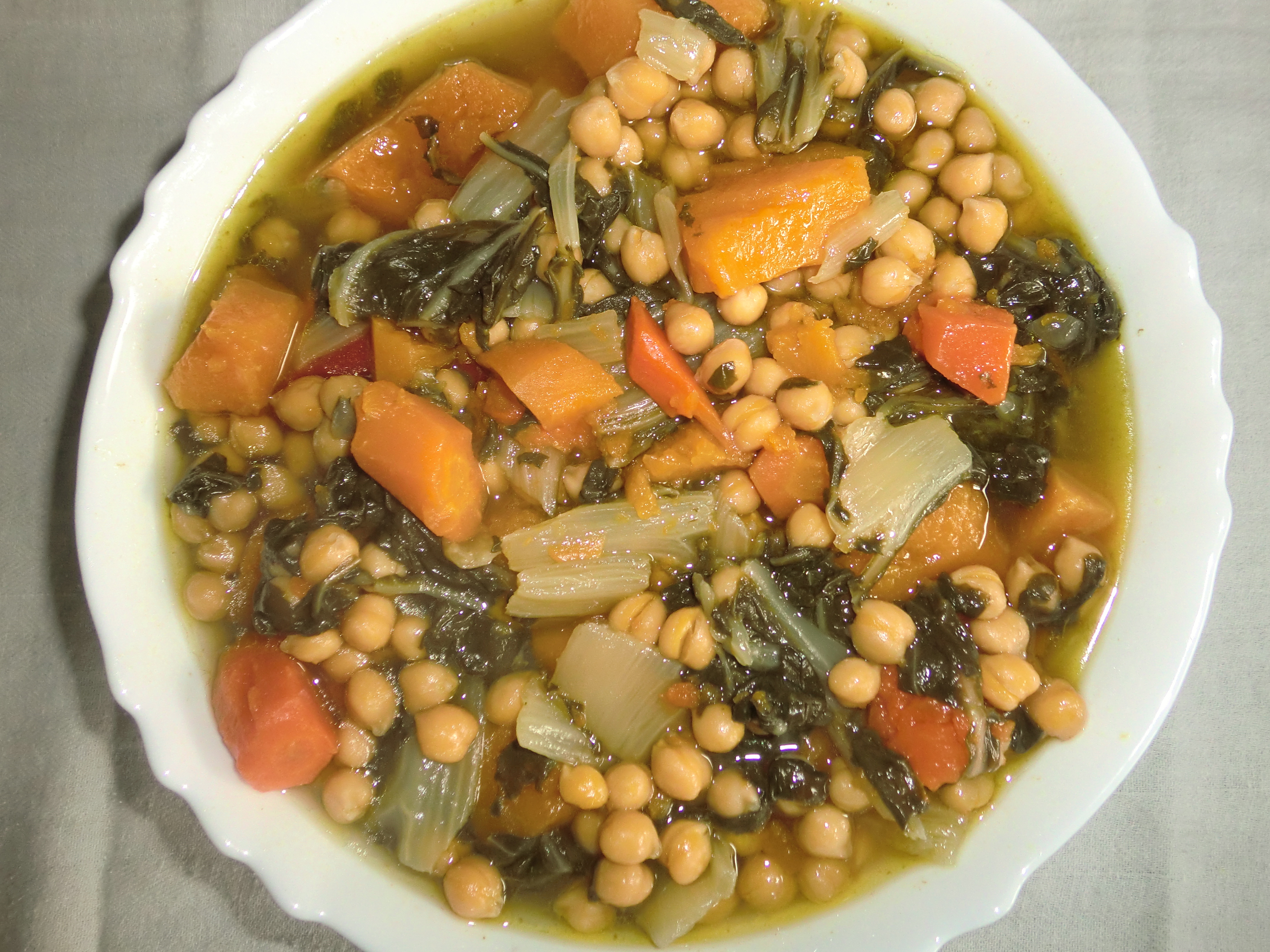
Chickpea stew. It does not lag behind. Let's say that it was the substitute for cocido (stew) during the Lenten season, when meat could not be eaten, which was replaced by cod.
Sea bream madrileña style. is a fish dish typical of Madrid's cuisine. The main ingredient is the sea bream baked in the oven and accompanied by vegetables and prawns.
Madrid style snails. A curious dish and that for those who do not know it may mean an initial rejection. The truth is that its flavor is usually surprising.
Potato omelet;It is an omelette (i.e., egg beaten and then fried) with potatoes, although you can also add more ingredients such as onion or chorizo, a classic in bars and restaurants in Madrid.
San Isidro Doughnuts. In the world of sweets these doughnuts are very typical of the San Isidro festivities. There are two types of doughnuts: the silly ones and the smart ones.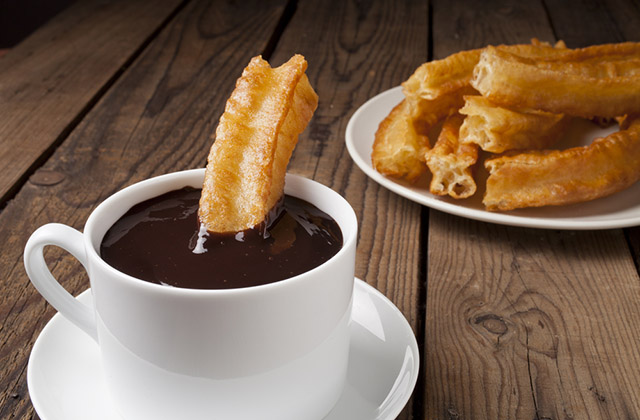
Churros with chocolate. A traditional and traditional breakfast in Spain. In Madrid, the churrería de San Ginés, in the Plaza Mayor, has taken over the tradition.
We invite you to discover the cuisine of Madrid. Contact us at without commitment, we design stays and gastronomic experiences for everyone.
Tell us what you thought of this article, please rate (1 TO 5 STARS).


