


The Valencian Community is an autonomous community located on the east coast of Spain, which is called the Spanish Levante. It is formed by the provinces of Alicante, Castellón and Valencia, and is bordered to the north by  Catalonia and Aragon, to the west with Castilla-La Mancha and Aragon, and to the south with the Region of Murcia.
As for the Gastronomy of the Community of Valencia This land is classified within what is known as pure Mediterranean food due to the use of olive oil, vegetables and fish. In addition, one of its most typical products is the rice, that characterizes the cuisine of this region. This cereal is a Muslim heritage that is preserved in the Iberian Peninsula and is the basis of dishes such as paella.
As for vegetables, Valencian oranges and tangerines are recognized worldwide. Other very typical products are saffron, peas, olives and garlic.
As for seafood and seafood products, great protagonists of the area, include squid, clóchinas (a native variety of mussel).
DESIGNATIONS OF ORIGIN OF THE VALENCIAN COMMUNITY
Since we have already talked about the main products and raw materials of the region, we are going to make a brief explanation of each of the Denominations of Origin of the land of citrus fruits and paella:
Oil from the Valencian Community: The denomination of origin protects the oil produced with different varieties of olives, many of which are native to the Valencian Community. The list of permitted varieties is quite extensive. The oil protected by the P.D.O. Aceite de la Comunitat Valenciana stands out for its levels of Omega 6 and for its high antioxidant level.
Benicarló artichokeThe Benicarló artichoke is a flat, compact flower with a characteristic dimple. The cultivated lands of the Benicarló artichoke are watered by the Mediterranean in the coastal plains of the Baix Maestrat region (Castellón), where the crops enjoy a moderate climate and a soil that pampers them. Spain is currently the second largest producer of artichokes in the world.

Wines from Alicante: Sweet wines in Alicante are a minority production. The red grape varieties are the following: Garnacha, Monastrell, Tempranillo, Bobal, Cabernet Sauvignon, Merlot, Pinot Noir and Syrah. On the other hand, the white varieties are: Muscat of Alexandria, Planta Fina, Merseguera, Chardonnay, Verdil, Sauvignon Blanc, Airén and Macabeo.
Rice from Valencia: The denomination of origin protects the cultivation of three traditional Valencian varieties, Bomba, Senia and Bahía, both white and brown. These rices are used to make dishes such as paella, arroz a banda, black rice, rice with beans and turnips, baked rice and rice with crust.
Aniseed Paloma Monforte del Cid: It is obtained from the distillation of green anise or star anise in neutral alcohol. It has an alcohol content between 40% and 55% with a maximum sugar content of 50 grams per liter, making it a relatively strong drink.
Coffee liqueur from Alcoy: A spirit obtained by maceration of naturally roasted Arabica coffee in neutral alcohol of agricultural origin, with an alcohol content between 15 and 25 % vol. and a dark-brown color. The minimum period of maceration of coffee in alcohol is ten days. There is a very similar drink, called Licor Café, which is typical of the Murcia and Galicia areas.
Cantueso alicantino: Liquor made in the province of Alicante. It is obtained by distilling the flower and stalk of the lavender plant and neutral alcohol. Its alcohol content is between 25% and 35% with a sugar content of 100 grams per liter, which gives it a characteristic sweet taste and a color ranging from transparent to brownish.
Alicante mountain cherries:  The protected varieties are Burlat, Tilagua, Planera, Nadal and Picota as main varieties and Star Hardy Geant, Bing and Van as pollinators. It is a Protected Geographical Indication of the provinces of Alicante and Valencia.
Wines from Castelló: protected geographical indication, used to designate local wines made from white grapes (Chardonnay, Malvasía, Merseguera, Muscat of Alexandria, Pedro Ximénez, Pedralba fine plant, Macabeo, airén, planta nova, sauvignon blanc and verdil) and red grapes (bobal, cabernet sauvignon, red garnacha, garnacha tintorera, merlot, Monastrell, Pinot Noir and tempranillo, bonicaire and syrah).
 Tigernut from Valencia: is a herbaceous plant between 40 and 50 centimeters high. It has a root system from which rootlets start at the ends of which tigernuts are formed. It contains cardiovascular properties similar to olive oil, helping to lower cholesterol and triglycerides, due to its high level of oleic acid.
MAIN TRADITIONAL DISHES OF VALENCIAN GASTRONOMY
The Valencian Community has a large number of traditional foods of great renown. Here we are going to explain the most representative ones: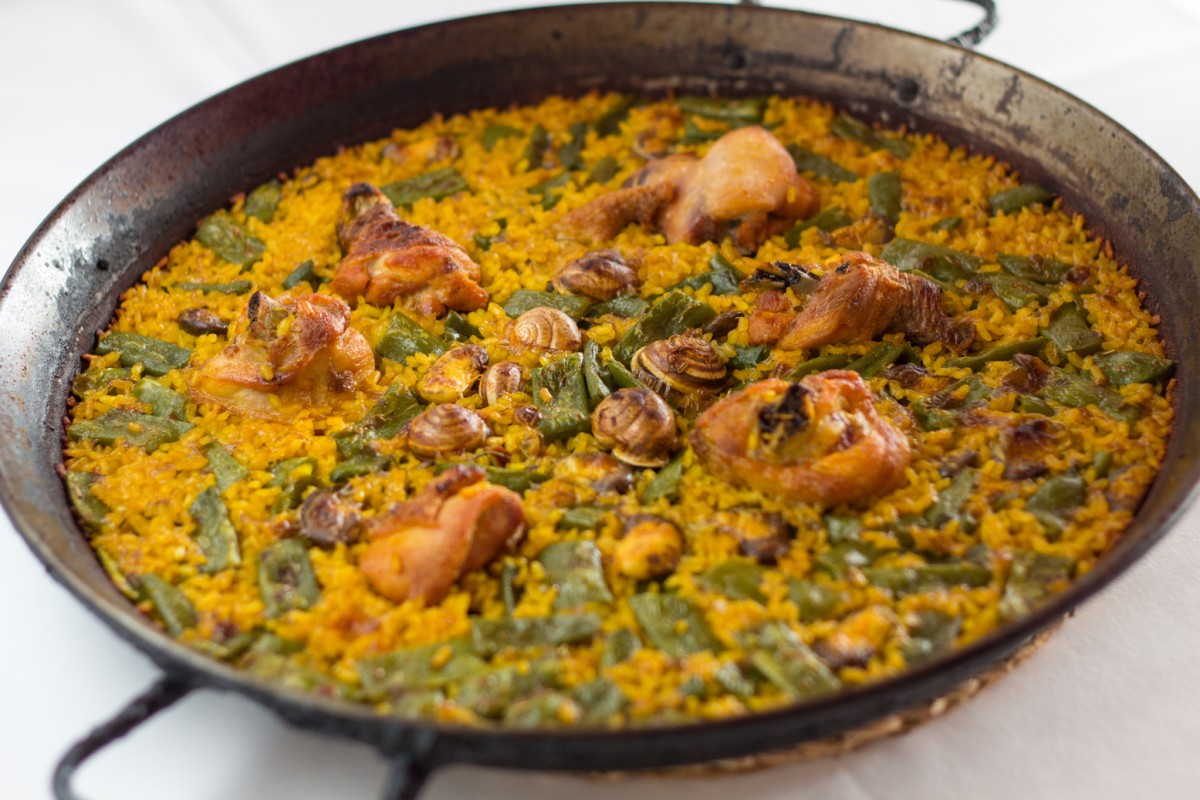
Valencian Paella: the original recipe of the Valencian paella was made with chicken, duck, rabbit and snails. However, due to its fame and international recognition, variants have appeared that are summarized in seafood paella made with a combination of fish and / or seafood, mixed paella sometimes also called sea and mountain, consisting of a mixture of meat and seafood (or fish) and mountain paella, which incorporates different typical products of each region such as ribs, rabbit, chicken, sausage or mushrooms.
Ball stew: is one of the stews  typical of traditional Christmas cooking. It is a stew that usually uses chickpeas as a legume and this means long cooking times. It is usually accompanied by a vegetable: potatoes, celery, cardoons, pumpkin. Sometimes pine nuts, saffron, paprika, parsley are added. Among the meat elements, pork meat is usually used in its preparation, such as knuckle of pork, chorizo, bacon with lean meat, etc. It is added the so called garreta (veal meat). Obviously, turkey or chicken (sometimes chicken) meat is used, and if you want a little more heaviness, goat kids are used.
Aioli or ajoaceite: It is the sauce par excellence of Valencian cuisine. It is used to season other dishes, especially seafood or fish, or as an accompanying sauce served separately from the dish it accompanies. Aioli sauce is obtained by emulsifying olive oil with garlic, using a traditional mortar for this purpose, although there are variants that use other additional ingredients.
Jijona nougat: is obtained from a mixture of toasted almonds mixed with egg white and honey. This mixture is usually ground in special mills until a uniform fluid mass is obtained. This mass is then subjected to a second cooking in cauldrons called “boixets”.
Water from Valencia: cocktail based on champagne, orange juice, vodka and gin. It is usually served in pitchers of several raci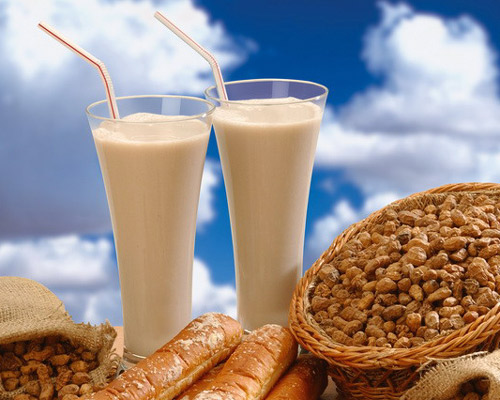 ones and is drunk in a glass of Champagne
Horchata: is a refreshing drink and also a dessert, prepared with water, sugar and ground tigernuts, in addition to ingredients that enhance its flavor such as cinnamon and lemon peel.
Tell us what you thought of this article, please rate (1 TO 5 STARS).


